About 140 households remain in Gangnam’s makeshift settlement as Seoul seeks to clear the site for 3,739 new homes
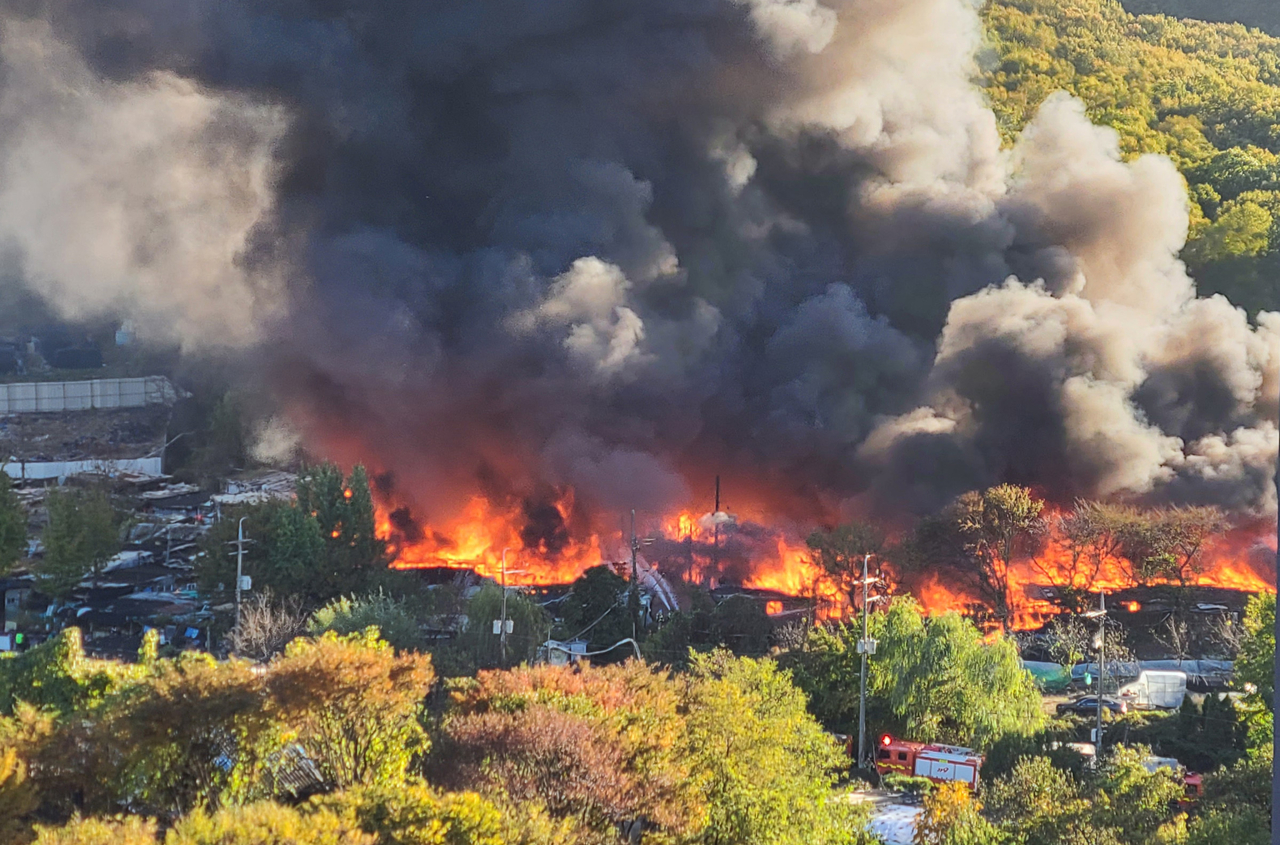
A major fire swept through a cluster of makeshift homes in Gangnam-gu, Seoul, on Tuesday, bringing renewed attention to Guryong Village and its long-planned redevelopment.
Most residents have moved out since the village was designated for redevelopment in 2016, but about 140 households remain.
The blaze affected 107 residents from 77 households before firefighters extinguished it early Wednesday, nearly 13 hours after it began. One woman suffered a minor leg injury.
Authorities arranged temporary accommodation at nearby schools and lodging facilities.
Construction has yet to begin in the area, but Seoul hopes to start in the first half of 2027. Relocating the remaining residents is a key unresolved issue.
Here is what to know about the settlement, why fires keep recurring and what is planned for the site.
Development and displacement
Guryong Village took shape in the 1970s and 1980s as people displaced by development in Gangnam settled in makeshift homes in southern Seoul.
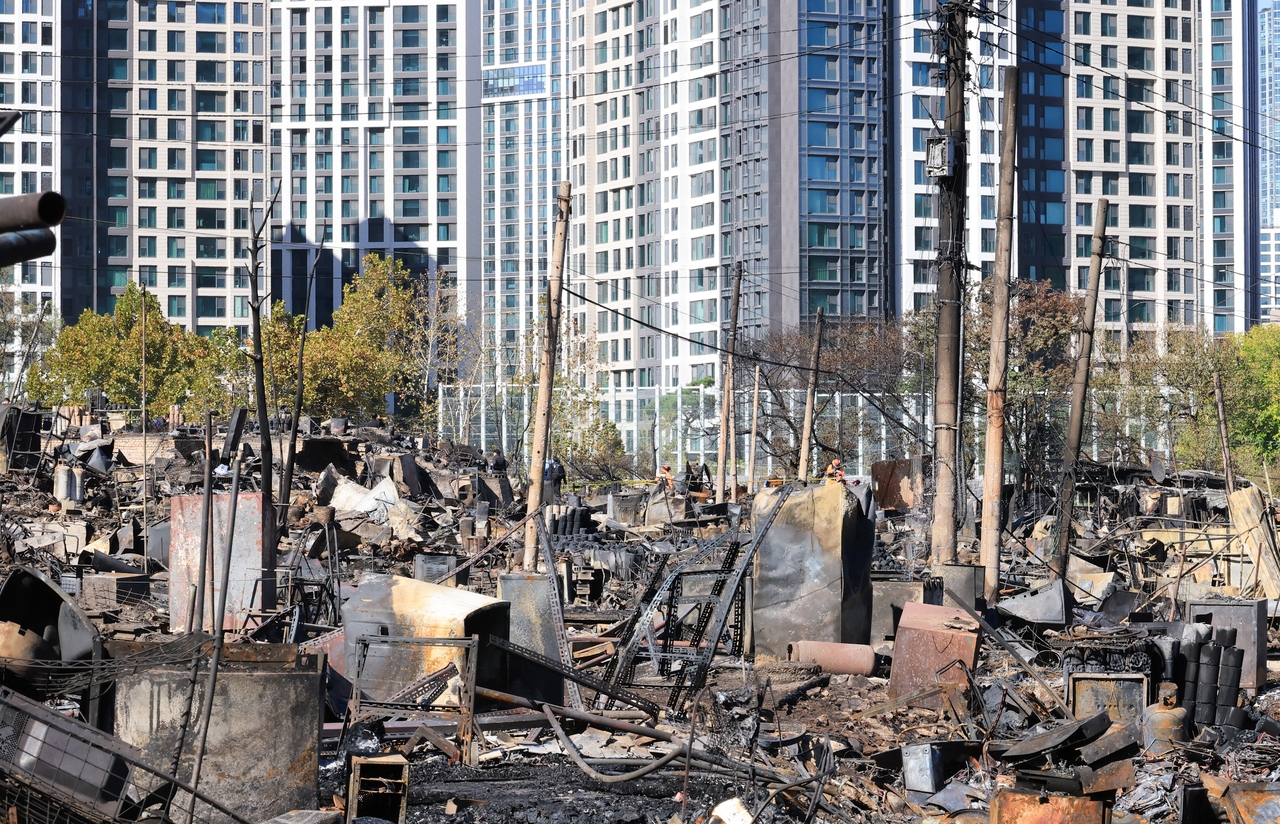
The settlement, Seoul's only remaining shantytown, covers approximately 267,000 square meters and is divided into eight sections. Its modest homes stand in a district now associated with expensive apartments and commercial development.
Many of Guryong's residents do not own the land beneath their homes; this has become a central issue in disputes over the area's redevelopment.
According to SH, Seoul’s public housing developer overseeing the project, most of the land belonged to private owners who did not live in the village, while some plots were publicly owned.
Fewer than 1 percent of residents owned the land they occupied before SH acquired it, an official said.
Vulnerable to fire
Police and fire authorities are investigating the cause of Tuesday's fire, but fire authorities said darkness, strong winds and a shortage of firefighting water complicated the latest operation.
Buildings are also tightly packed, and narrow passageways restrict access for fire engines, making it difficult to contain spreading flames.
Many homes in Guryong were built with flammable materials, including plywood, vinyl sheets and insulation. Aging electrical wiring is another fire risk.
Tuesday’s blaze followed major fires in January this year and September last year.
The planned replacement
The village's redevelopment plan calls for a 3,739-unit residential complex.
It will include 1,691 long-term jeonse rental homes, 1,107 public rental homes for former village residents and 941 homes for sale. Jeonse is a Korean housing arrangement in which tenants pay a large refundable deposit rather than monthly rent.
SH acquired the land last year and aims to begin construction in the first half of 2027, provided the remaining households have relocated.
The relocation dispute
Most of the village’s original 1,107 households have moved out, according to SH.
The Seoul Metropolitan Government says it has provided public rental housing for relocating residents, with rent reduced by 60 to 100 percent depending on income.
About 140 households remain. According to SH, many are seeking the opportunity to own an apartment in the new complex rather than return as public rental tenants.
“There are currently 140 households yet to relocate, many of whom are demanding the right to purchase and own apartments in the new complex,” an SH official told The Korea Herald.
The distinction is between being offered a place to rent and being given the right to buy a home in the development. SH’s account identifies an outstanding demand, though it does not establish why every remaining household has stayed.
What comes next
For those affected by Tuesday’s fire, the immediate concern is accommodation. Gangnam-gu arranged shelters at Gaepo and Guryong middle schools and at nearby lodging facilities.
The longer-term relocation process is proceeding alongside preparations for construction.
“We aim to begin construction as early as the first half of 2027, once the remaining households have relocated,” the SH official said.
SH is also pursuing legal proceedings to obtain possession of the properties while seeking residents’ agreement to move.
“If we win, we may consider eviction enforcement as a last resort to allow construction to begin in 2027.”
yunapark@heraldcorp.com